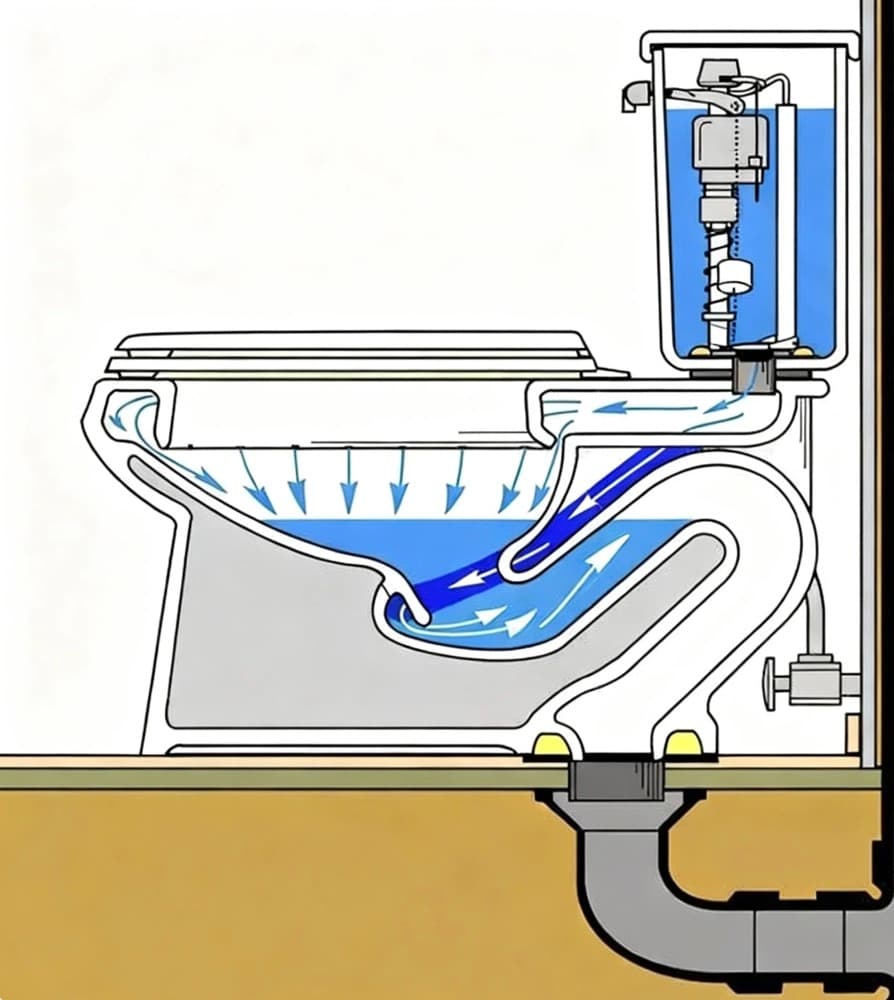
Common Toilet Repair Structure Diagram

Click parts or search to see repair guides

Toilet Diagram
👈

Click parts or search to see repair guides

Click a part or search for a problem

Common Problems

FAQ

QMy toilet is clogged and the plunger isn't working.

Ensure you are using a flange plunger (designed for toilets) and that water covers the cup. If plunging fails, use a toilet auger (closet auger) to reach deeper and break up the clog. Avoid chemical drain cleaners as they can damage pipes and porcelain.

QWhy does my toilet keep running?

The most common cause is a worn or warped flapper at the bottom of the tank. It could also be the fill valve set too high, causing water to flow into the overflow tube. Replacing the flapper is a cheap, quick, and easy fix.

QWhy is water leaking from the base of the toilet?

The wax ring seal connecting the toilet to the floor flange has failed. This is often caused by a wobbly toilet breaking the seal or simple aging. You must lift the toilet to replace the wax ring. Consider a "wax-free" seal for easier installation.

QWhy is the flush so weak?

Check the water level in the tank; it should be about 1/2 inch below the top of the overflow tube. If the level is fine, the rim jets under the bowl rim might be clogged with mineral deposits. Clean them with a wire or vinegar.

QWhy does the toilet make a whistling or vibrating noise?

This is usually caused by a worn washer or diaphragm inside the fill valve, often heard just as the tank finishes filling. Replacing the entire fill valve is the standard and most reliable solution.

QWhen should I call a professional plumber?

Call a pro if you suspect a main sewer line clog (multiple drains backing up), if the toilet bowl itself is cracked, or if you've tried these DIY steps without success. It's better to be safe than risk water damage.